


Construction Cost Estimating 101: From Concept to Completion
By NorthStar EstimatingMay 20, 2026
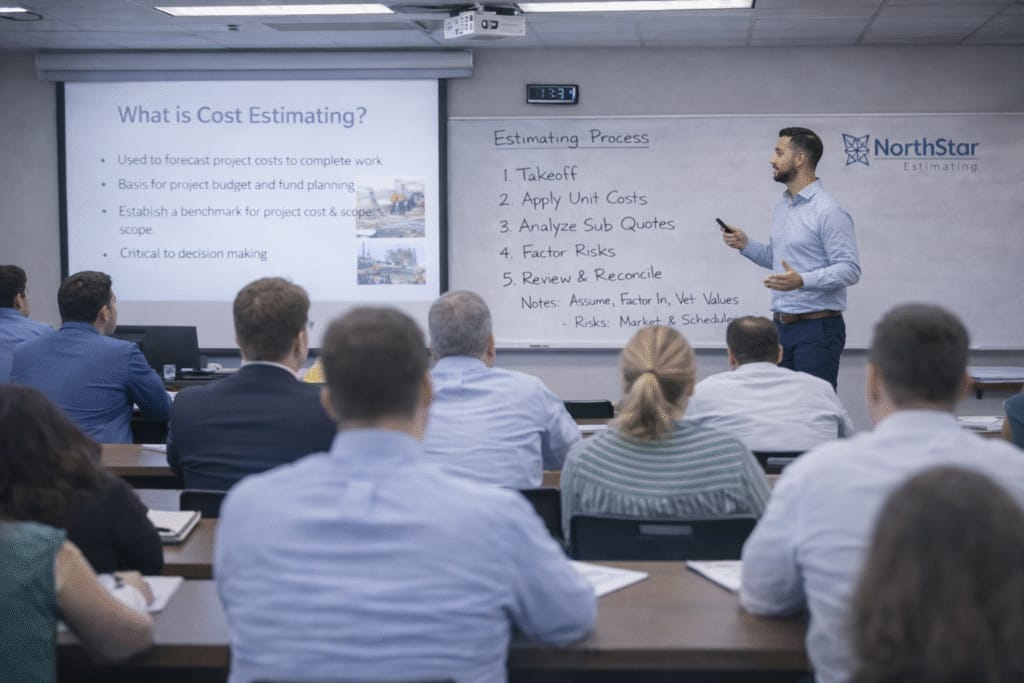
A construction cost estimate is more than a number on a page. It is a structured forecast of what a project will cost to build, and it becomes the financial backbone of every decision that follows — from securing funding to awarding contracts.
What goes into an estimate
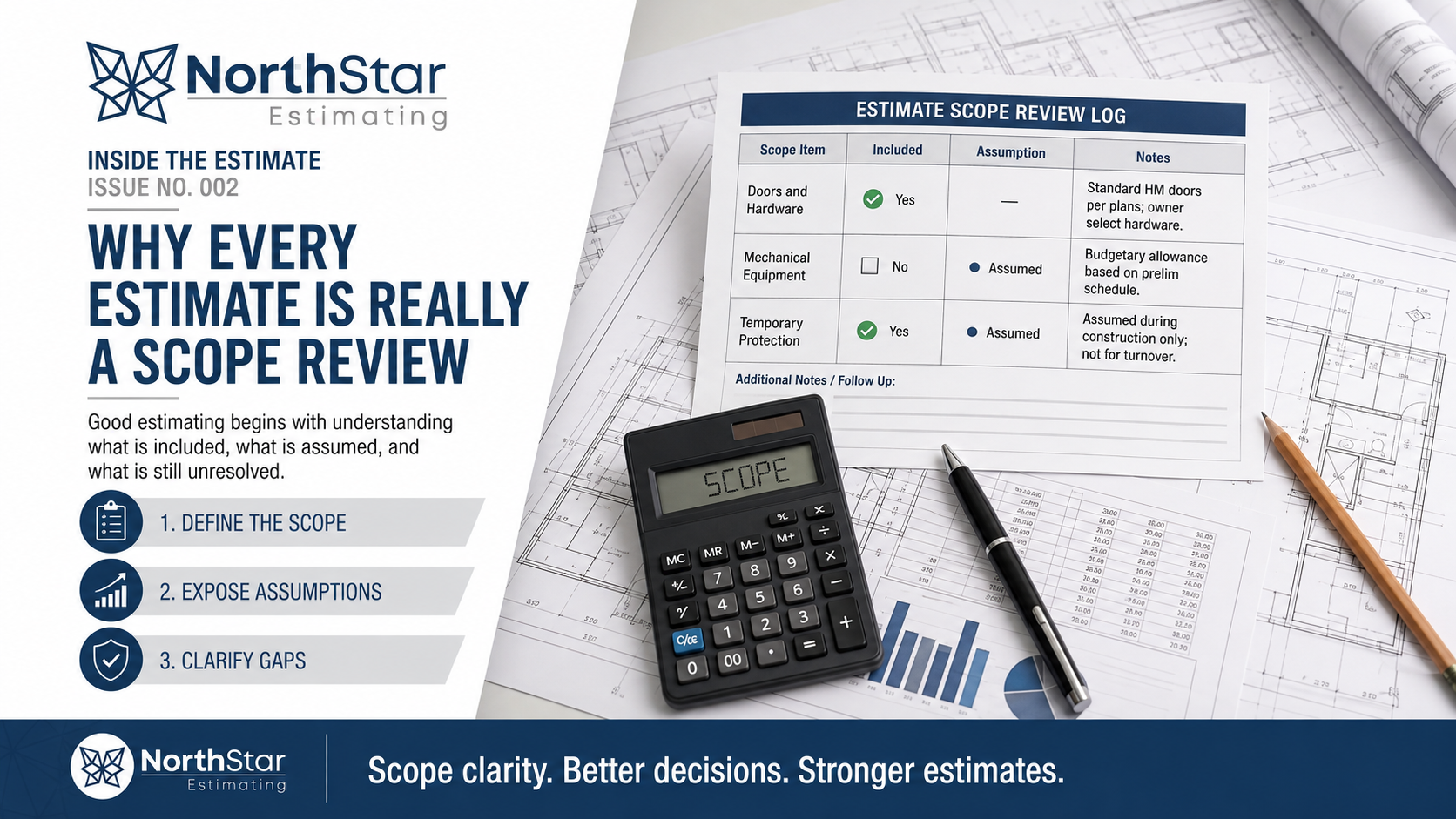
A complete estimate accounts for far more than materials and labor. It typically includes:
- Direct costs — materials, labor, and equipment tied to physical work.
- Indirect costs — general conditions, supervision, permits, and insurance.
- Contingency — a reserve sized to the project's risk and design maturity.
- Escalation — the effect of market conditions over the construction timeline.
Leaving any of these out is the most common reason an estimate looks attractive early and painful later.
Accuracy improves as the design matures
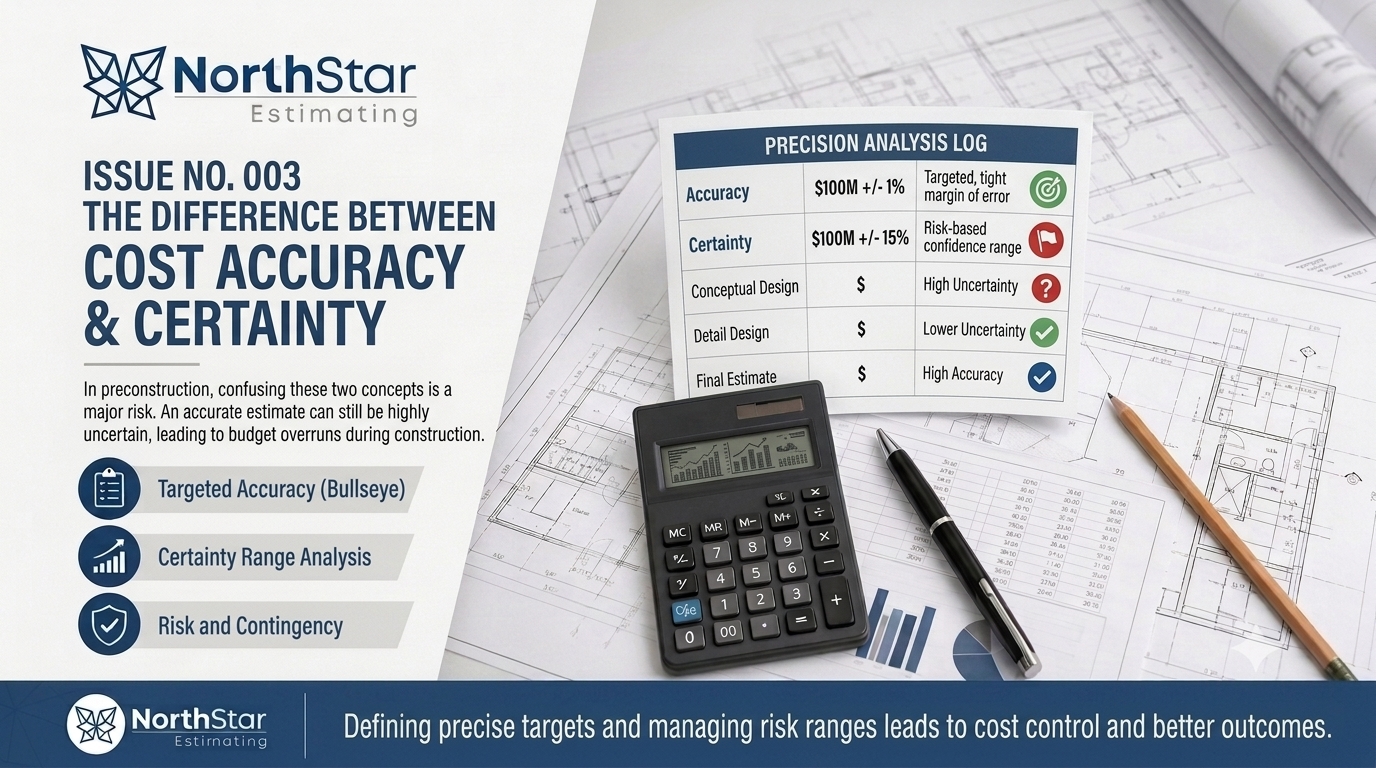
No estimate is perfectly precise the day a project is conceived. Early "order-of-magnitude" estimates may carry a wide range, while a detailed estimate built from a near-complete design narrows that range considerably. The value of an early estimate is not pinpoint accuracy — it is catching budget problems while they are still inexpensive to fix.
Why this matters before you break ground
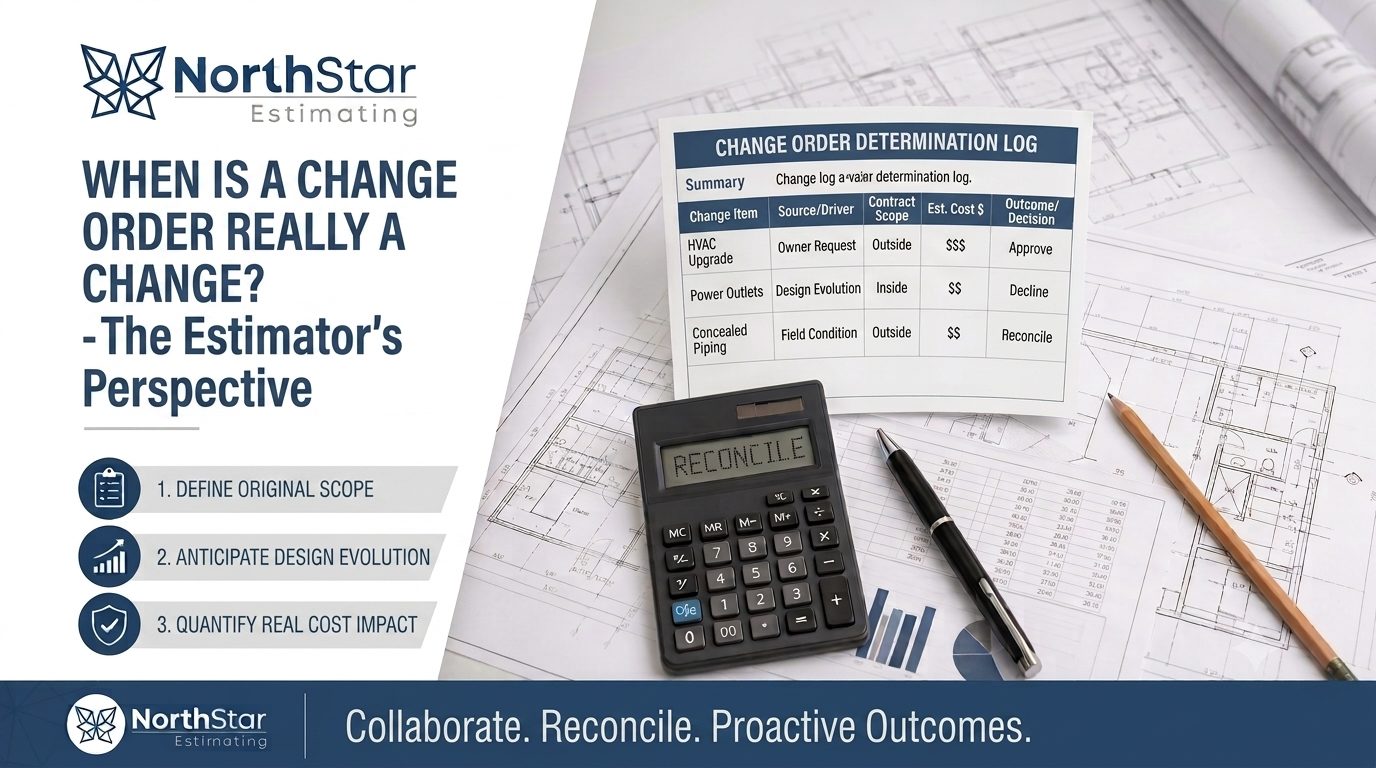
The cost of changing a project drops sharply the earlier you act. Reworking a drawing is cheap; reworking a foundation is not. A disciplined estimate at each design stage gives owners the confidence to plan, budget, and secure funding without surprises.
This is the foundation of our capital project estimating work — and the reason we recommend estimating early and often.